About sodium Gluconate food
Sodium Gluconates early uses were primarily in medicine due to its mild and non-toxic properties. Over time, its applications expanded to various industries, including food, pharmaceuticals, construction, textiles, and more, as its versatile properties and safety profile became more widely recognized.
Food Industry: Sodium Gluconate is used as a food additive for various purposes, including as a sequestrant to prevent metal ions from affecting the color, flavor, or stability of food products.
Construction: Sodium Gluconate is employed in the construction industry as a concrete admixture. It acts as a water reducer and retarder, enhancing the workability and performance of concrete.
Textiles: In textile dyeing and printing, it is utilized as a chelating agent to improve color fastness.
Metallurgy: Sodium Gluconate is employed for metal surface treatment and cleaning, particularly for steel surfaces.
Cleaning Products: It can be found in cleaning agents for glass bottles and as a chelating agent in various cleaning formulations.
Premium Food Grade QualitySodium Gluconate meets strict FCC and GB/T standards, ensuring a product free from significant contaminants such as heavy metals and chloride. Its granular powder form is consistently pure and offers excellent solubility, making it ideal for various food applications. The careful production process guarantees food safety and compliance for global distribution.
Versatile Applications Across the Food IndustryKnown for its effectiveness as a sequestrant and stabilizer, sodium gluconate is widely employed in dairy products, beverages, and processed foods. Its role extends to maintaining product consistency, enhancing quality, and prolonging shelf life without compromising safety. As a non-poisonous, organic salt, it is trusted by manufacturers and suppliers worldwide.
FAQs of sodium Gluconate food:
Q: How is sodium gluconate used in the food industry?
A: Sodium gluconate is primarily used as a sequestrant and stabilizer in food manufacturing. It helps preserve the quality of dairy products, beverages, and various processed foods by controlling metal ions that could cause spoilage or off-flavors.
Q: What are the main benefits of using sodium gluconate as a food additive?
A: As a food additive, sodium gluconate improves shelf life, enhances texture, and maintains product stability. Its non-toxic and odorless profile makes it suitable for sensitive applications in foods where taste and safety are paramount.
Q: When should sodium gluconate be added during food processing?
A: It is typically incorporated during the mixing or blending stages, ensuring even distribution throughout the product. Its high solubility in water guarantees rapid dissolution and consistent integration in food production processes.
Q: Where should sodium gluconate be stored to maintain its quality?
A: To preserve its effectiveness, sodium gluconate should be stored in a cool, dry environment, away from moisture and contaminants. It should remain tightly sealed in its original packaging, which is designed to prevent contamination and degradation.
Q: What is the process for ensuring the purity and safety of sodium gluconate food grade?
A: The manufacturing process follows strict FCC and GB/T chemical standards, with rigorous testing for purity, moisture, heavy metals, and other impurities. Each batch is carefully monitored to guarantee compliance with international safety and quality requirements.
Q: How is sodium gluconate packaged and supplied?
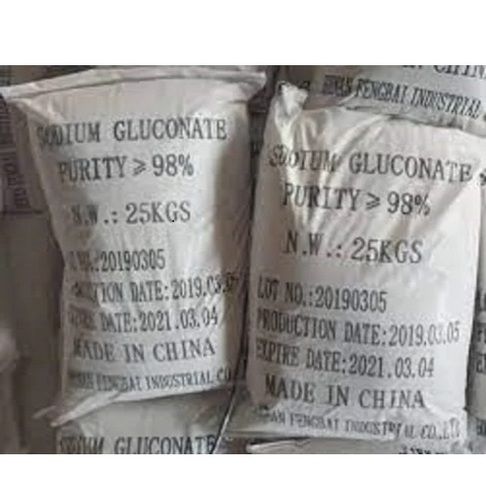
A: Sodium gluconate is distributed in 25 kg net paper or plastic bags with liners to ensure protection from external factors, making it suitable for export and long storage. These packages facilitate easy handling by manufacturers and suppliers.
Q: What makes sodium gluconate an effective stabilizer in beverage and dairy products?
A: Its ability to chelate metal ions helps prevent unwanted reactions that could upset the taste, appearance, or texture of foods and beverages. This stabilizing effect is key to maintaining product quality throughout its shelf life.




 Send Inquiry


 Send Inquiry