About Phosphoric acid
Specific applications of phosphoric acid include:
Properties and HandlingPhosphoric acid is colorless, odorless, and possesses a sour taste with a syrupy viscosity at room temperature. It should be stored in a cool, ventilated area, away from strong bases and metals to ensure longevity and safety. While stable, it is corrosive, so appropriate protective measures must be taken during handling to avoid harm.
Diverse ApplicationsThis compound is widely applied across industries-serving as a key ingredient in fertilizers, food additives, rust removers, dental and orthopedic treatments, and water purification systems. Its adaptability to technical, food, and industrial uses allows it to meet multifaceted market demands for both large-scale industry and laboratory environments.
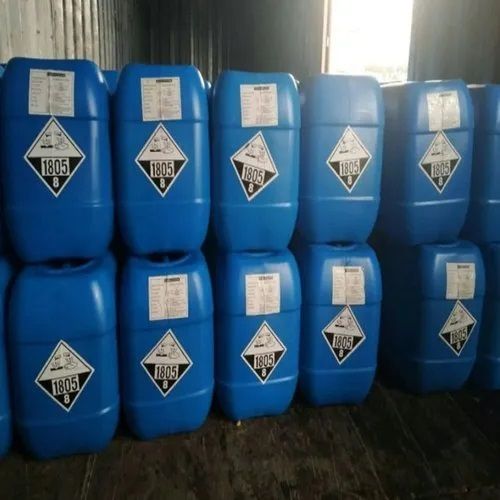
Quality Assurance and PackagingPackaged in robust plastic barrels, drums, and IBC tanks, phosphoric acid is preserved for optimal stability and safety in transit and storage. Each batch complies with international standards, ensuring reliable purity and quality whether distributed, exported, or supplied for domestic consumption.
FAQ's of Phosphoric acid:
Q: How should phosphoric acid be stored for maximum shelf life?
A: Phosphoric acid should be stored in a cool, well-ventilated area, away from strong bases and metals. Using designated plastic barrels or IBC tanks protects it from contamination and ensures a shelf life of up to two years under proper storage conditions.
Q: What are the main industrial and commercial uses of phosphoric acid?
A: Phosphoric acid is employed in the production of fertilizers, food and beverage additives, rust removers, dental and orthopedic applications, and water treatment. Its versatility makes it an essential reagent for both technical processes and food-grade applications.
Q: When is it necessary to exercise extra caution while handling phosphoric acid?
A: Since phosphoric acid is corrosive but not classified as non-toxic, handling should always involve protective equipment such as gloves, goggles, and proper ventilation, particularly during large-scale or laboratory work, to prevent chemical burns or inhalation exposure.
Q: What process is used for packaging and transporting phosphoric acid safely?
A: Phosphoric acid is placed into sturdy plastic drums, barrels, or IBC tanks that comply with UN1805 regulations. This packaging method ensures chemical stability during transit and minimal risk of leaks or contamination.
Q: Where is phosphoric acid most commonly used in the food industry?
A: In the food sector, phosphoric acid serves as an acidity regulator and preservative in soft drinks and processed foods. Its food-grade quality ensures safety and consistency for various manufacturing needs.
Q: What are the benefits of using phosphoric acid in water treatment applications?
A: Phosphoric acid is effective in adjusting the pH level and preventing scale formation in water systems. Its solubility and strong acidity make it suitable for keeping water supplies clean and reducing pipe corrosion during large-scale water treatment processes.




 Send Inquiry


 Send Inquiry